
Last month a father called our helpline at almost 11pm. Didn’t even say hello properly, just launched straight in — “Something is wrong with my son, I don’t know what, but something is wrong.” He’d been sitting with that feeling for weeks, maybe longer, and just hadn’t picked up the phone until that night.
That’s how it usually goes. Nobody wakes up one morning and thinks “my child is using drugs.” It creeps up sideways. A comment here, a missed curfew there, an argument that felt a bit too intense for the reason behind it. And because teenagers are already moody and secretive by nature — that’s practically the job description of being fifteen or sixteen — parents end up explaining away things that, looked at together, tell a much clearer story.
So this piece is really just that. The things we’d tell that father if he asked us to lay it all out — what to watch for, physically and otherwise, and what actually helps once you notice it.
Why teenagers are more at risk than we’d like to admit
Here’s something most parents don’t realize until someone tells them straight out: the teenage brain genuinely isn’t finished growing. The part responsible for thinking things through, weighing consequences, hitting the brakes before doing something risky — that part doesn’t fully mature until the person is well into their twenties. So a 16-year-old isn’t being reckless because they’re a bad kid. Biologically, the wiring for careful decision-making just isn’t all there yet.
Add to that the usual pressure cooker — board exams, comparison culture on Instagram, and in a lot of homes, the constant low-hum fear of letting parents down — and you start to see why some teens reach for something to numb it all, or to fit in with a group where using is already normal, or honestly sometimes just out of boredom and curiosity. It’s rarely one single reason.
Physical signs that quietly pile up
The body usually gives something away before words do, though most parents don’t clock it in the moment.
Eyes that look red or glassy more often than they should. Pupils that seem too big or too small for the room they’re in. Some teens stop caring about how they look almost overnight, hair unwashed, same clothes worn too many days in a row. Others go the opposite way, dousing themselves in perfume or burning incense at odd hours, like they’re trying to cover something up. Because sometimes they are.
Slurred words now and then. Clumsiness that wasn’t there before — tripping, knocking things over. Nosebleeds that show up too often to be nothing. A cough that hangs around without a cold attached to it. Small burn marks on fingers or near the lips that nobody can quite explain. Sleep gets strange too — awake till 3, 4am some nights, or sleeping through half the day and still complaining of being tired.
None of this on its own means much. Teenagers are odd on a normal day anyway. It’s when a few of these show up together, and keep repeating, that it stops being nothing.
What the behavior tells you
This is honestly where most parents end up finding their answer, even if they didn’t go looking for it.
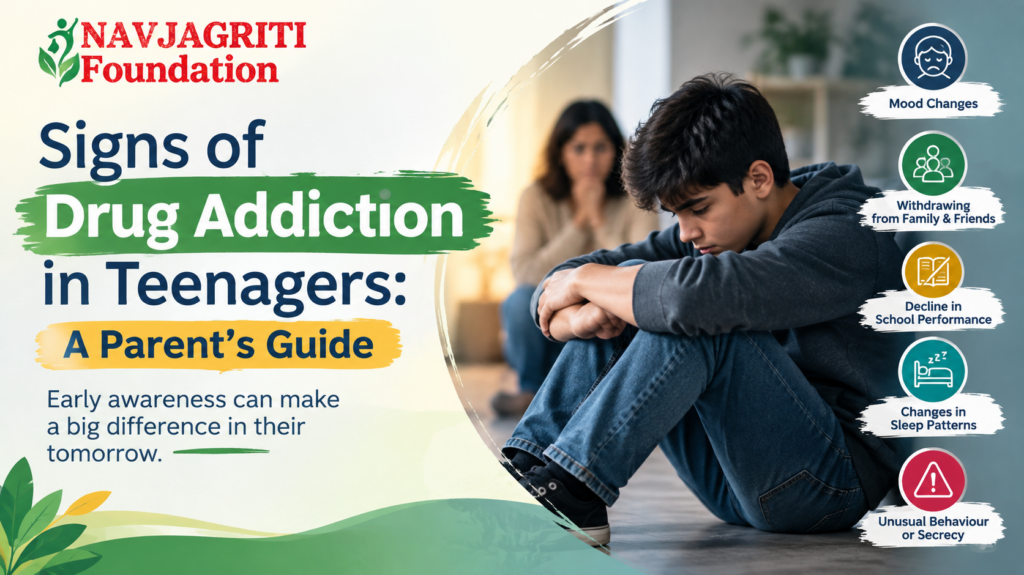
Pulling away from the family is usually one of the first things noticed — skipping dinner, short answers, hours behind a closed door. Around the same time, the friend group often changes, and there’s a strange vagueness whenever you ask who these new people even are.
Grades slipping is a big one. Missed classes. A kid who used to be obsessed with cricket or guitar or whatever it was, suddenly not caring at all. Money starts disappearing in small amounts, or the requests for cash get more frequent without any believable reason attached. Sometimes things go missing from the house too — a watch, some jewellery, small electronics — sold quietly somewhere.
Phones get locked. Doors get locked. Ask a simple question and you might get snapped at, which on its own could just be teenage attitude, except it tends to come bundled with lying that’s gotten noticeably smoother over time. Where were you, who were you with, why didn’t you answer — the excuses get better and better. And the mood itself can flip hard, sometimes within the same evening. Laughing one hour, furious the next, gone quiet an hour after that.
And underneath all of it
Addiction doesn’t stay in one lane. It bleeds into how a teenager feels, not just how they act. A lot of them get more anxious than usual, or low, sometimes a bit paranoid without an obvious trigger. Some get defensive the second the word “drugs” comes up anywhere near the conversation, even indirectly. Others just go flat — nothing excites them anymore, nothing really upsets them either, like the volume’s been turned down on everything.
If a teenager starts saying things like “what’s even the point,” don’t brush it off as drama. It might be nothing. It also might not be. Either way it’s worth sitting down and actually asking.
You don’t have to sit with this alone
That father who called at 11pm — he didn’t have proof either, not really. Just a feeling he couldn’t shake anymore, and finally the nerve to say it out loud to someone. That’s usually the hardest part. Not the treatment, not the recovery. Just that first phone call, or that first honest conversation with your own kid.
At Our Navjagriti Foundation Nasha mukti Kendra we sit with families in exactly this spot fairly often. If something about your teenager has been nagging at you for a while now, you really don’t have to wait for it to get worse before reaching out. Even a rough, unsure first conversation tends to go further than staying quiet ever does.
Frequently Asked Questions
What do parents usually notice first?
Mostly behavior — pulling away from family, sudden secrecy, or a new friend group nobody’s met — often before any physical signs show up clearly.
Can mood swings alone mean my teenager is using something?
Not really. Mood swings are just part of being a teenager. They matter more when paired with other physical or behavioral changes together.
Should I search my teenager’s room if I suspect something?
Talk first, if you can. Searching before that conversation often breaks trust and can push them toward hiding things more carefully.
When is it actually time to bring in professional help?
Once a few warning signs keep showing up for a few weeks straight. Getting help early usually makes recovery noticeably smoother.
Does Navjagriti Foundation work with teenagers specifically?
Yes, our counselling and de-addiction programs are built for adolescents, with families staying involved through the entire process.