
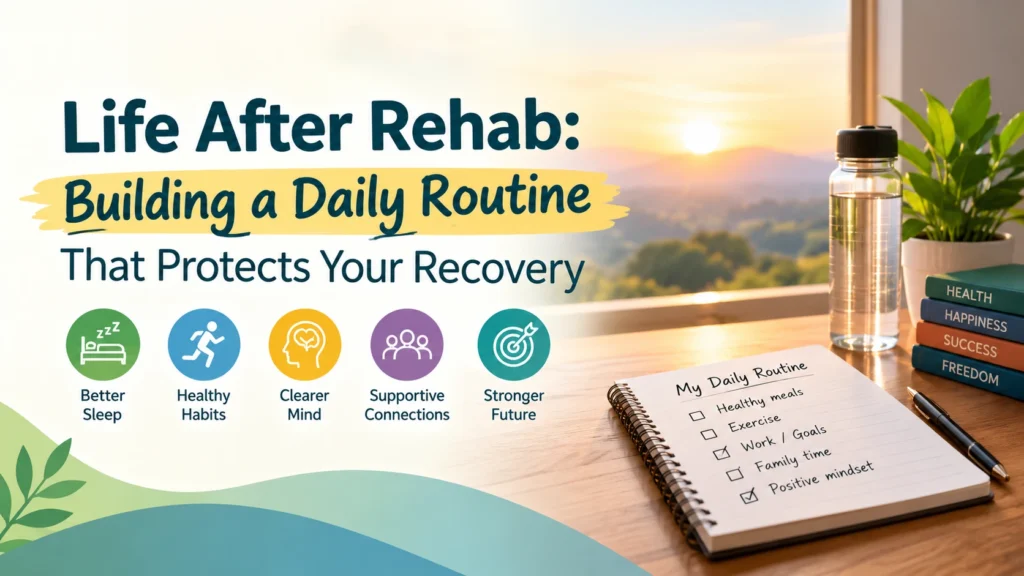
Last year a young man left our centre after 60 days. He was feeling strong. Three days later he called us. Nothing bad had happened. He was just sitting at home with nothing to do, and that scared him.
This is what many people face after rehab. At the centre, someone tells you when to eat, when to sit in a session, when to sleep. At home, nobody does. Here is how to do it without making it hard.
Why a plain routine helps
When you are tired or upset, you make poor choices. A fixed routine means fewer choices to make. You already know what comes next, so you don’t have to think much, and your mind stays calmer.
Start with sleep and food
These two are boring but they matter most. Wake up at the same time every day, even on Sunday. Try to sleep 7 to 8 hours. Eat three proper meals. Dal, sabzi, roti, some fruit and curd are enough.
Hunger and tiredness make you angry and low, and that is when cravings feel strongest. Many people who slip say they had skipped meals and slept badly for days before it.
Fill your day
Empty time is the biggest danger in the first few months. Try to have something to do from morning to evening. This can be a job, helping in the family shop, a short course, or cooking at home. Even small things count, like fixing something in the house or picking up the kids from school.
Add some movement too. A 30-minute walk is fine. You don’t need a gym.
Know what pulls you back
Sit down with a notebook and write what makes you want to use again. It could be an old friend’s call, the day you get your salary, the street where you used to buy, a fight at home, or a lazy Sunday afternoon.
Now write what you will do when that happens. For example, if the old friend calls, don’t pick up, or keep it short and then message someone you trust. If you feel a craving, drink water, wait 20 minutes and tell someone. Cravings usually fade if you don’t act on them.
Make this plan when you are calm. It is hard to think clearly in the middle of a craving.
Keep talking to people
Don’t wait for a bad day to call someone. Put it in your week. Go to your counselling sessions or support group. Call the counsellor from the centre once in a while. Tell at least one person at home the truth about how you feel.
Most centres, including ours, will give you an aftercare plan when you leave. Follow it like you would follow a doctor’s medicine chart.
Make your evenings easy
Evenings are when old habits come back. Have dinner at the same time. Before you sleep, think of one thing that went well that day, even if it was small. Then rest.
If you slip
It happens to many people, and it does not mean you have failed. What matters is what you do next. Call your counsellor. Get up the next morning and go back to your routine. Hiding it makes things worse. Telling someone makes them better.
If you ever feel you are in serious trouble, see a doctor or call at +91-8744086440
One last thing
Pick one habit, maybe waking up at the same time or a walk after dinner. Do it for two weeks. Then add the next one. Slowly, ordinary days begin to feel normal again.